




 Hybrid
 Individual Pocketed Coil
 Foam
Foam Open Coil
 Latex
Latex




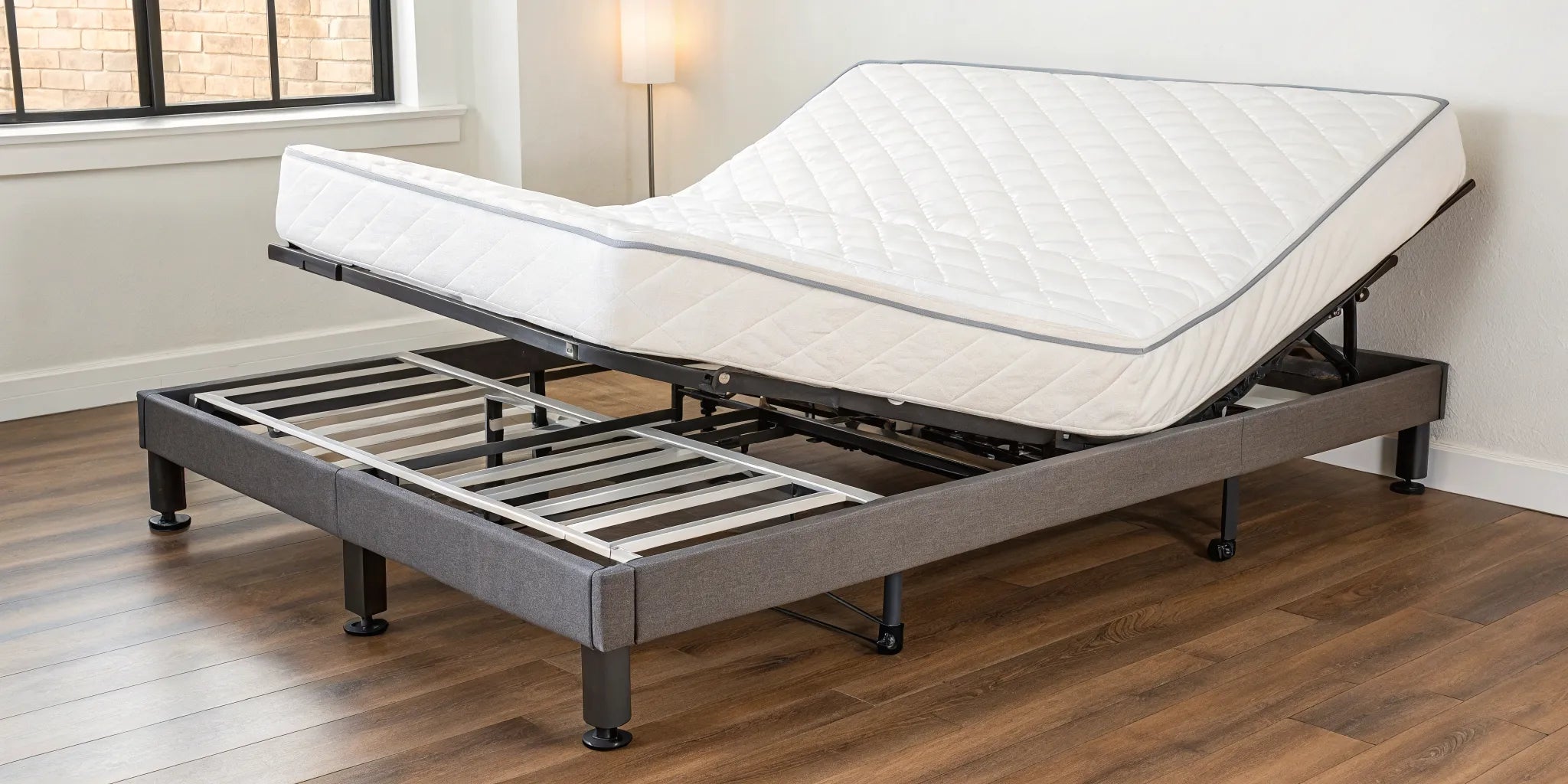
The idea that a single mattress can be perfect for two different people is becoming a myth. If one of you loves a firm surface and the other craves a plush feel, a medium-firm mattress is a compromise that satisfies no one. The future of sleep for couples is personalization. With options like split king mattresses and adjustable bases, you no longer have to settle. Each partner can have their ideal firmness and sleeping position, side-by-side. The best mattress for couples isn’t about finding a middle ground; it’s about creating a customized sleep environment. This guide will show you how to use these modern solutions to build a bed where both of you can finally get a perfect night’s sleep.
Key Takeaways
- Couples often have different sleep positions, firmness preferences, and temperature needs — the right mattress balances all of them.
- Motion isolation is the single most important feature for undisturbed sleep when sharing a bed.
- Hybrid mattresses with individually wrapped coils offer the best combination of support, pressure relief, and motion separation for couples.
- Split king setups with adjustable bases let each partner customize their side independently.
- Testing a mattress together in person is the most reliable way to find a bed that works for both of you.
Sharing a bed should feel restful — not like a nightly compromise. If you and your partner have different sleep styles, firmness preferences, or temperature sensitivities, you are far from alone. The good news is that modern mattress design has caught up with this reality. Today’s best mattresses for couples are built to handle different needs on each side of the bed.
This guide walks through what actually matters when two people share a mattress and which options available at Mattress On Demand in Richmond, TX and Katy, TX are worth your attention.
Why Mattress Shopping is Different for Couples
When one person sleeps hot on their stomach and the other sleeps cool on their side, a single medium-firm rating does not solve the problem. Couples need to consider multiple factors at once:
- Motion isolation — Does movement on one side transfer to the other?
- Firmness range — Is the mattress comfortable across different sleep positions?
- Temperature regulation — Does it sleep cool enough for the hot sleeper without feeling cold to the partner?
- Edge support — Can both people use the full surface without rolling off?
- Durability under two bodies — Will the mattress hold up with double the weight and movement?
That is a lot to balance. The right approach is to prioritize the top two or three dealbreakers for your specific situation and then test in person.
How Sleep Quality Impacts Your Relationship
It’s no secret that a rough night’s sleep can leave you feeling irritable and short-tempered. When that happens night after night, it can start to wear on your relationship. As sleep expert Dr. Shelby Harris explains, regularly losing sleep because you share a bed can be bad for your health and your partnership. The problem often comes down to the mattress itself. If one person’s tossing and turning constantly wakes the other, resentment can build. That’s why motion isolation is often considered the most critical feature for couples. A mattress that absorbs movement prevents those little disturbances from turning into big arguments the next day. Finding a mattress that supports both of your sleep needs isn't just about comfort; it's an investment in your shared happiness and well-being.
5 Features the Best Mattress for Couples Should Have
1. Stop Feeling Every Toss and Turn
If your partner tosses and turns, you feel it — unless your mattress is built to absorb that motion. Individually wrapped pocketed coils and dense foam comfort layers are the two most effective technologies for reducing motion transfer. Innerspring mattresses with interconnected coils tend to transmit more movement across the surface.
2. Find a Mattress That Keeps You Both Cool
When two people share a bed, the combined body heat is significantly higher than sleeping alone. Mattresses with gel-infused foam, phase-change cover materials, and breathable coil systems help manage that extra warmth. The Brooklyn Bedding Aurora Luxe is specifically designed for cooling and is one of the strongest options for couples where one or both partners sleep hot.
Advanced Cooling Materials
Temperature regulation is a major factor when you share a bed, especially if one of you sleeps hotter than the other. Thankfully, today’s mattresses address this with impressive cooling technologies designed to keep you both comfortable. Many feature gel-infused foams that draw heat away from the body or advanced phase-change materials woven into the cover that actively regulate the surface temperature. If you or your partner tend to generate a lot of warmth, look for breathable covers made from fabrics like Tencel or foams infused with conductive materials like copper. Hybrid mattresses also excel here, as their innerspring systems promote natural airflow, preventing heat from becoming trapped. Focusing on these materials can significantly reduce nighttime discomfort from shared body heat.
3. Agree on a "Just-Right" Firmness
A medium or medium-firm feel is often the best starting point for couples with different preferences. It is soft enough for side sleepers who need pressure relief at the shoulders and hips, and supportive enough for back and stomach sleepers who need spinal alignment. If the gap between your preferences is wide, consider a split configuration instead of compromising on a single feel.
The Medium-Firm Sweet Spot
Finding common ground is key in any relationship, and it's no different with your mattress. For many couples, that common ground is a medium-firm feel. This popular firmness level provides a fantastic balance, offering enough softness to cushion pressure points like the hips and shoulders for side sleepers, while remaining supportive enough to keep the spine aligned for back and stomach sleepers. It’s the versatile choice that accommodates different sleep styles without feeling too hard or too soft for either person. Hybrid mattresses, which combine supportive coils with contouring foam layers, often hit this sweet spot perfectly, providing a universally comfortable surface that helps both partners sleep soundly through the night.
Solutions for Different Firmness Needs
But what happens when a compromise just won’t cut it? If one of you needs a firm, supportive surface and the other craves a plush, cloud-like feel, a split configuration is your best solution. A Split King, for example, is made of two separate Twin XL mattresses placed side-by-side in one frame. This allows each of you to choose the exact firmness you need without impacting your partner. This setup is especially powerful when paired with adjustable bases, as it gives each person independent control over their head and foot elevation. It’s the ultimate way to personalize your sleep experience, ensuring neither of you has to sacrifice comfort for the sake of the other.
4. Use Every Inch of Your Mattress
Strong edge support means you can use the entire mattress surface, which matters when two adults share a queen or king. Look for reinforced perimeter coils or high-density foam encasement. This also makes getting in and out of bed easier.
5. Get Flexibility for an Adjustable Base
If you and your partner have very different preferences for head or foot elevation, an adjustable base is the most practical solution. Paired with a split king mattress, each person can set their own position independently. The Beautyrest Baselogic Platinum Adjustable Base is a strong option that supports full articulation and preset positions.
6. Consider Responsiveness and Intimacy
Responsiveness is just a technical term for how quickly a mattress bounces back when you move. While a deep, sinking memory foam can feel cozy when you’re sleeping solo, it can sometimes feel like quicksand when you’re trying to change positions or get intimate with your partner. A mattress with more bounce makes movement feel effortless, not like a workout. This is why many couples find that hybrid mattresses, which combine supportive coils with comfort layers, offer the perfect balance. They provide that gentle lift and easy movement without sacrificing the pressure relief you both need to sleep comfortably through the night.
7. Check for Proper Weight Support
A mattress for two needs to be strong enough to handle double the weight, night after night, without developing dips or sags. The core of the mattress is what does the heavy lifting, so you want to look for a durable support system. While all-foam mattresses can provide support, hybrid models are often the champions of longevity for couples. The combination of a steel coil base and foam layers provides robust support that can withstand the combined weight of two people over many years. For example, brands like Helix build their mattresses with this kind of durability in mind, ensuring your investment continues to support your relationship and your sleep for a long time.
Our Top-Rated Mattresses for Couples
Here are four options that address the most common concerns couples face when shopping for a shared mattress:
- Brooklyn Bedding Aurora Luxe Cooling Mattress — Best for couples where temperature is the primary concern. Its cooling cover and gel-infused foam layers actively pull heat away from the body, while individually wrapped coils keep motion transfer low. Available in multiple firmness options.
- Helix Midnight Luxe Hybrid Mattress — Best all-around choice for couples with different sleep styles. The medium feel works for side, back, and combination sleepers. It features zoned lumbar support and a GlacioTex cooling cover, making it versatile enough to satisfy both partners.
- Beautyrest Baselogic Platinum Adjustable Base — Best for couples who want independent positioning. When paired with a compatible split king mattress, each partner can raise or lower their head and feet without affecting the other side. This is the most effective way to accommodate very different comfort needs.
- Nectar Premier Hybrid Mattress — Best budget-friendly option for couples. It delivers solid motion isolation through its foam layers and pocketed coils, with a medium-firm feel that suits most sleep positions without breaking the bank.
Visit a Mattress On Demand showroom in Richmond or Katy to lie down on these mattresses together and feel the difference side by side — our sleep consultants will help you and your partner find the perfect fit.
Comparing Mattress Types for Couples
The material a mattress is made from has the biggest impact on motion isolation, temperature, and feel. Understanding the basic differences between memory foam, innerspring, latex, and hybrid models will help you and your partner narrow down the options before you even step into a showroom. Each type offers a distinct experience, and knowing the trade-offs is key to finding a bed that makes you both happy. Let's break down the pros and cons of each type specifically for couples.
Memory Foam
Memory foam is famous for its body-contouring "hug" and pressure-relieving properties. It was engineered to absorb impact, which is why it's a popular choice for couples looking to minimize disturbances from a restless partner.
Pros and Cons
The biggest win for memory foam is its incredible motion isolation—if your partner moves, you're less likely to feel it. This material is also fantastic for relieving joint pain and is a good choice for anyone with allergies. On the downside, that signature "sinking" feeling can make it harder to move around, and some traditional memory foams are known to trap heat. While newer versions have cooling technologies, it's something to be aware of if one of you sleeps hot. Some models can also have weaker edge support, shrinking the usable surface area of the bed.
Innerspring
Innerspring mattresses are the most traditional type, built with a core of steel coils. They are known for their firm support and bouncy feel, which some people love.
Pros and Cons
The open coil structure of an innerspring mattress allows for excellent airflow, making it a great option for hot sleepers. The inherent firmness also provides solid support for stomach sleepers who need to keep their hips from sinking. However, this design is not the best for couples concerned with motion transfer. The interconnected coils can create a ripple effect across the bed, and they can become noisy over time. While some modern innersprings use special coils to reduce this, they generally don't isolate motion as well as foam or hybrid models.
Latex
Latex is a responsive and durable material often derived from rubber trees. It offers a unique combination of contouring and bounce, making it a compelling alternative to memory foam.
Pros and Cons
Like memory foam, latex is quite effective at stopping motion and noise from traveling across the bed, ensuring a more peaceful night for both partners. Where it differs is in its responsiveness; latex is much bouncier, so you won't feel "stuck" in the mattress. This makes it easier to change positions during the night. The main drawback can be similar to some foam mattresses—the potential for weaker edge support, which is an important factor when two people are sharing the bed and need to use the entire surface.
Hybrid
Can't decide between the support of coils and the comfort of foam? A hybrid mattress gives you both. These mattresses combine a supportive core of individually wrapped coils with top layers of memory foam, latex, or other comfort materials.
Pros and Cons
Hybrids are often the ideal solution for couples because they balance so many needs at once. The pocketed coils provide bounce and support while doing an excellent job of isolating motion. Meanwhile, the foam or latex top layers deliver pressure relief and contouring comfort. This combination also promotes airflow, making hybrids a great choice for temperature regulation. While they can be slightly noisier than an all-foam bed, they are a huge improvement over traditional innersprings. Exploring different hybrid mattresses is a great starting point for most couples.
Queen, King, or Split King: Which Size Is Right for You?
Mattress size has a bigger impact on couples’ sleep quality than most people realize. Here is a practical breakdown:
- Queen (60 x 80 inches) — Works for smaller bedrooms but gives each person only 30 inches of width, which is less than a twin. Fine for couples who do not move much at night.
- King (76 x 80 inches) — The most popular size for couples. Each person gets 38 inches of personal space — equivalent to a twin XL — with room to spread out.
- Split King (76 x 80 inches, two 38 x 80 halves) — Two separate twin XL mattresses placed side by side. This allows each partner to choose their own firmness level and, when paired with an adjustable base, their own head and foot positions.
If your bedroom can accommodate a king, it is almost always the better choice for couples. And if your firmness preferences are more than one level apart, a split king with an adjustable base is worth the investment.
Bridging the Gap in a Split King
A split king setup is a game-changer for couples, allowing each person to choose their own firmness and use an adjustable base independently. But what about the gap in the middle? It’s a valid concern, but it’s also easily solved. Think of it as a tiny trade-off for a massive upgrade in personalized comfort. You don't have to choose between a unified bed and individual support—you can have both. The key is to bridge that small space so you can enjoy the full surface of your mattress without interruption.
The most effective solution is a foam mattress connector or "bed bridge" designed to fit right into the gap, creating a smooth, level surface. For an even more seamless feel, cover both mattresses with a single king-sized mattress protector and fitted sheet. This simple step not only secures the connector but also helps the two twin XLs feel like one cohesive king bed. This way, you get all the benefits of a split setup without ever noticing the space between them.
How to Try Out a Mattress (Together)
Online research is a starting point, but the only reliable way to know if a mattress works for both of you is to test it together. Here is how to make the most of an in-store visit:
- Both partners should lie down at the same time. Motion isolation only shows up when both sides are occupied.
- Test your actual sleep positions. If one of you is a side sleeper and the other sleeps on their back, get into those positions and hold them for at least a minute.
- Have one person change positions while the other stays still. This is the best way to evaluate motion transfer.
- Check edge support by sitting on the side of the mattress. You should not feel like you are going to slide off.
- Talk about what you feel. Discomfort on one side is a signal that a different firmness or a split configuration might be needed.
The sleep consultants at Mattress On Demand are experienced in helping couples navigate these trade-offs. Booking an appointment ensures you get focused attention and enough time to compare options properly.
Beyond the Mattress: Tips for Harmonious Sleep
Finding the perfect mattress is a huge step toward better sleep as a couple, but it’s not the final one. Once you have that solid foundation, the next step is to fine-tune your sleep environment. Small adjustments to your bedding, lighting, and sound can resolve those lingering nighttime frustrations that even the best mattress can’t fix on its own. Think of your mattress as the stage and these elements as the lighting and sound design — they all work together to create a peaceful production. By addressing these details, you can transform your shared bedroom into a true sanctuary where both partners can rest without interruption.
Customize Your Comfort with Separate Bedding
Do you and your partner fight over the covers? Or does one of you sleep hot while the other is always cold? The simplest solution is often to use separate blankets or duvets. This approach, popular in Scandinavia, allows each person to control their own temperature without compromise. The same logic applies to pillows. A side sleeper needs a different loft and firmness than a back sleeper, so choosing pillows based on individual needs is essential for proper neck alignment. With a supportive mattress that has strong edge support, you both have plenty of room to create your own personalized comfort zone on each side of the bed.
Manage Light and Sound
Even with perfect motion isolation, your sleep can be derailed by a partner’s late-night phone scrolling or an early alarm. Light and sound are two of the biggest disruptors for couples. Investing in blackout curtains can block streetlights and morning sun, while encouraging a no-phones-in-bed rule can reduce blue light exposure. For noise, a white noise machine is excellent for masking snoring or other ambient sounds. If your sleep schedules are drastically different, one partner might consider using a sleep mask and earplugs to stay asleep when the other gets up. Creating a dark, quiet room helps you both get the most out of your mattress investment.
Frequently Asked Questions About Mattresses for Couples
What's the best type of mattress for couples?
Hybrid mattresses with individually wrapped coils are generally the best choice for couples. They combine the motion isolation of foam with the support and breathability of coils, making them versatile enough to accommodate different sleep styles and temperature preferences.
Is a split king mattress actually worth it?
A split king is worth it if you and your partner have significantly different firmness preferences or if one of you needs head or foot elevation while the other does not. Paired with an adjustable base, a split king gives each person full control over their side of the bed.
Does motion isolation really matter for couples?
Motion isolation is one of the most important features for couples, especially if one partner is a restless sleeper or gets in and out of bed during the night. Mattresses with pocketed coils and dense foam layers perform best at preventing motion from transferring across the surface.
What's the right mattress size for a couple?
Most couples are happiest with a king-size mattress, which gives each person 38 inches of personal space. A queen can work in smaller bedrooms, but the reduced width means more chance of disturbing each other during the night.
My partner sleeps hot, I sleep cold. Can a mattress help?
Yes. Cooling hybrid mattresses with gel-infused foam and breathable covers help regulate temperature without making the surface uncomfortably cold for the cooler sleeper. The Brooklyn Bedding Aurora Luxe is specifically designed for this scenario.